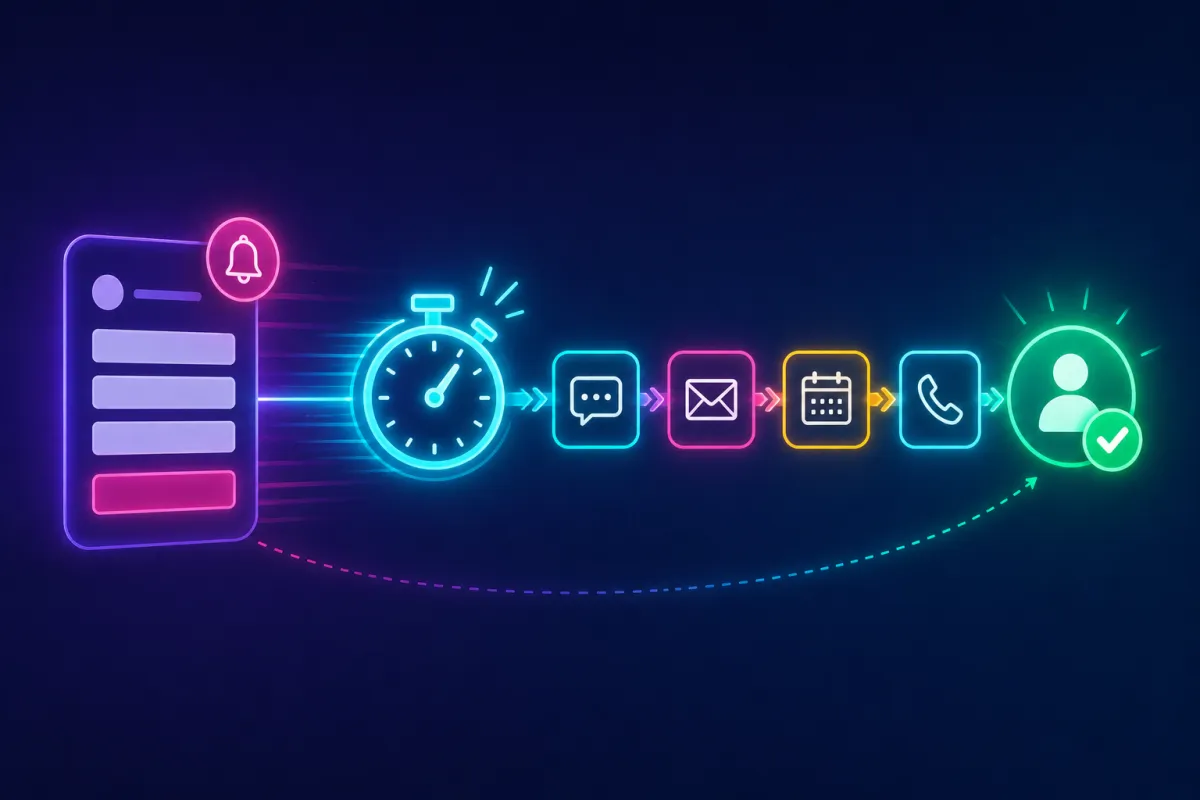
The First 5 Minutes After a Lead Enquiry Matter
The First 5 Minutes After A Lead Comes In Decides Everything
Most businesses spend a huge amount of time focusing on generating leads.
They invest in websites.
They invest in advertising.
They invest in landing pages.
Yet many overlook the single factor that can have the biggest impact on conversion rates:
What happens immediately after the enquiry.
The reality is simple.
The first five minutes after a lead comes in can determine whether that lead becomes a customer or disappears forever.
Why Timing Matters
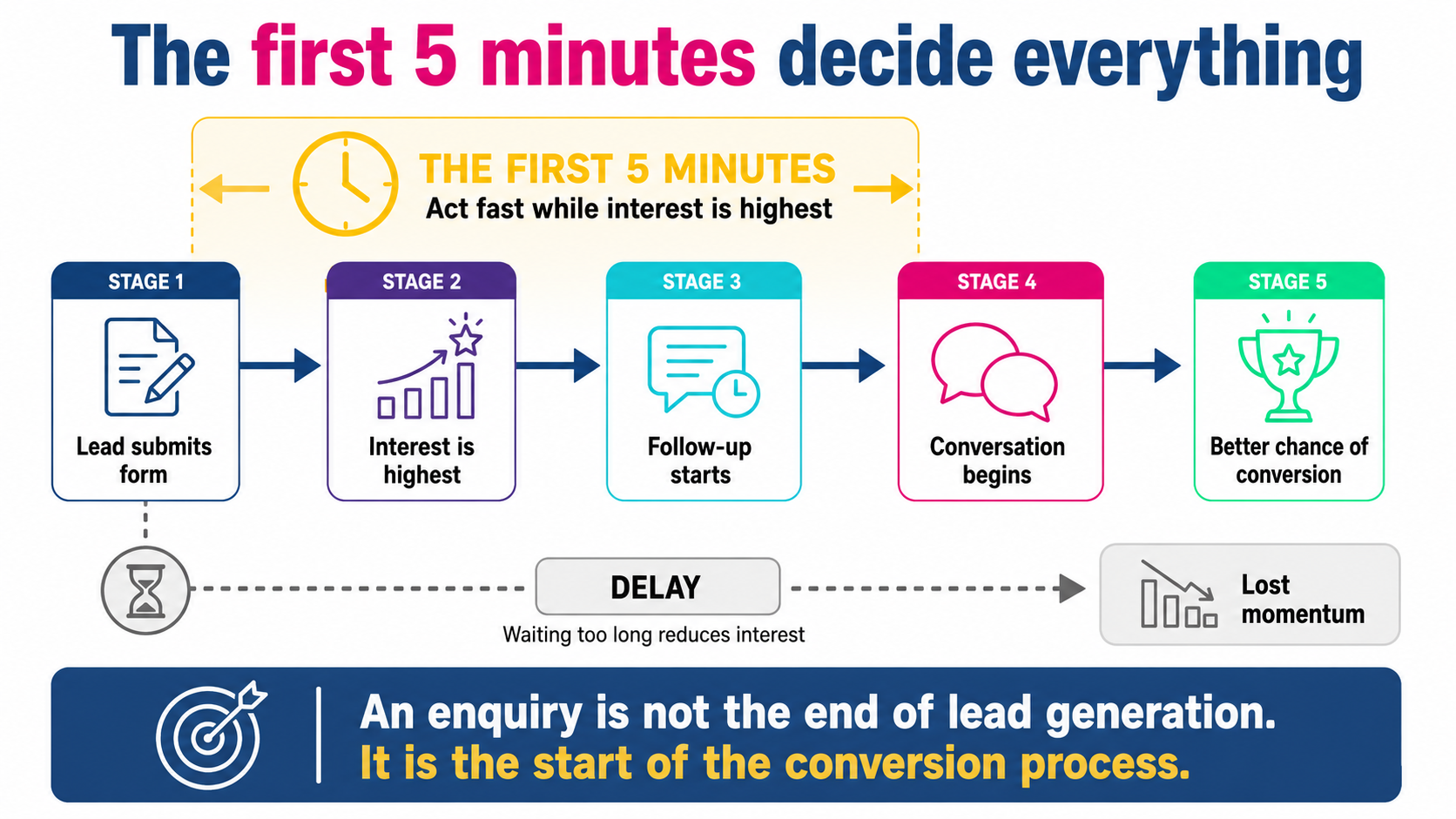
When someone submits an enquiry, they are at their highest level of interest.
They've just:
Seen your advert
Read your offer
Visited your website
Filled in a form
At that moment, they are engaged.
The problem is that engagement fades quickly.
Life gets in the way.
Work takes over.
Children need attention.
Emails arrive.
Competitors call.
What felt important five minutes ago becomes less important an hour later.
The Cost Of Delayed Follow-Up
Imagine a prospect submits an enquiry at 8:30pm.
You don't see it until the following morning.
By then:
They've spoken to competitors
Their urgency has reduced
Their attention has shifted elsewhere
The opportunity hasn't necessarily disappeared.
But it has become significantly harder to convert.
Businesses often assume they have a lead quality issue when they actually have a speed issue.
Why Most Businesses Lose Leads
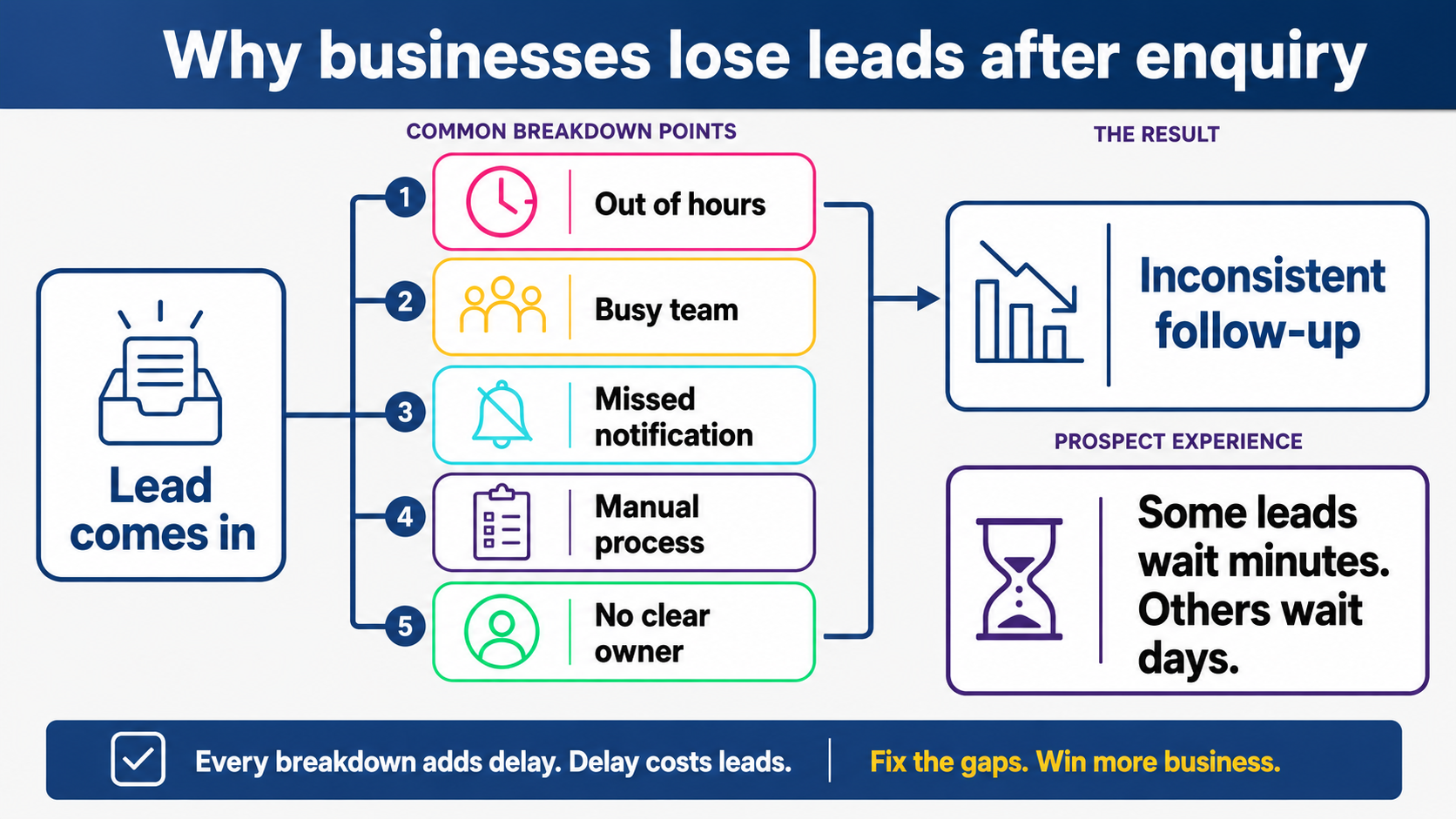
The most common reasons include:
Enquiries arriving outside working hours
Busy sales teams
Missed notifications
Manual processes
Lack of ownership
The result is inconsistent follow-up.
Some leads receive a call within minutes.
Others wait hours or even days.
From the prospect's perspective, this creates a poor experience.
The Psychology Of Momentum
People are more likely to take action when momentum exists.
When they enquire, they have momentum.
When they hear nothing, momentum disappears.
Fast follow-up keeps prospects moving forward.
Slow follow-up allows them to drift away.
The businesses converting the highest percentage of enquiries understand this.
They focus on maintaining momentum from the moment a lead arrives.
Automation Solves The Problem
This is where automation becomes incredibly valuable.
Rather than relying on someone being available, businesses can instantly send:
SMS messages
Email confirmations
Calendar booking links
Qualification forms
Helpful information
This ensures every lead receives an immediate response.
Even while you're sleeping.
Even during weekends.
Even during holidays.
What A Good Lead Response Looks Like
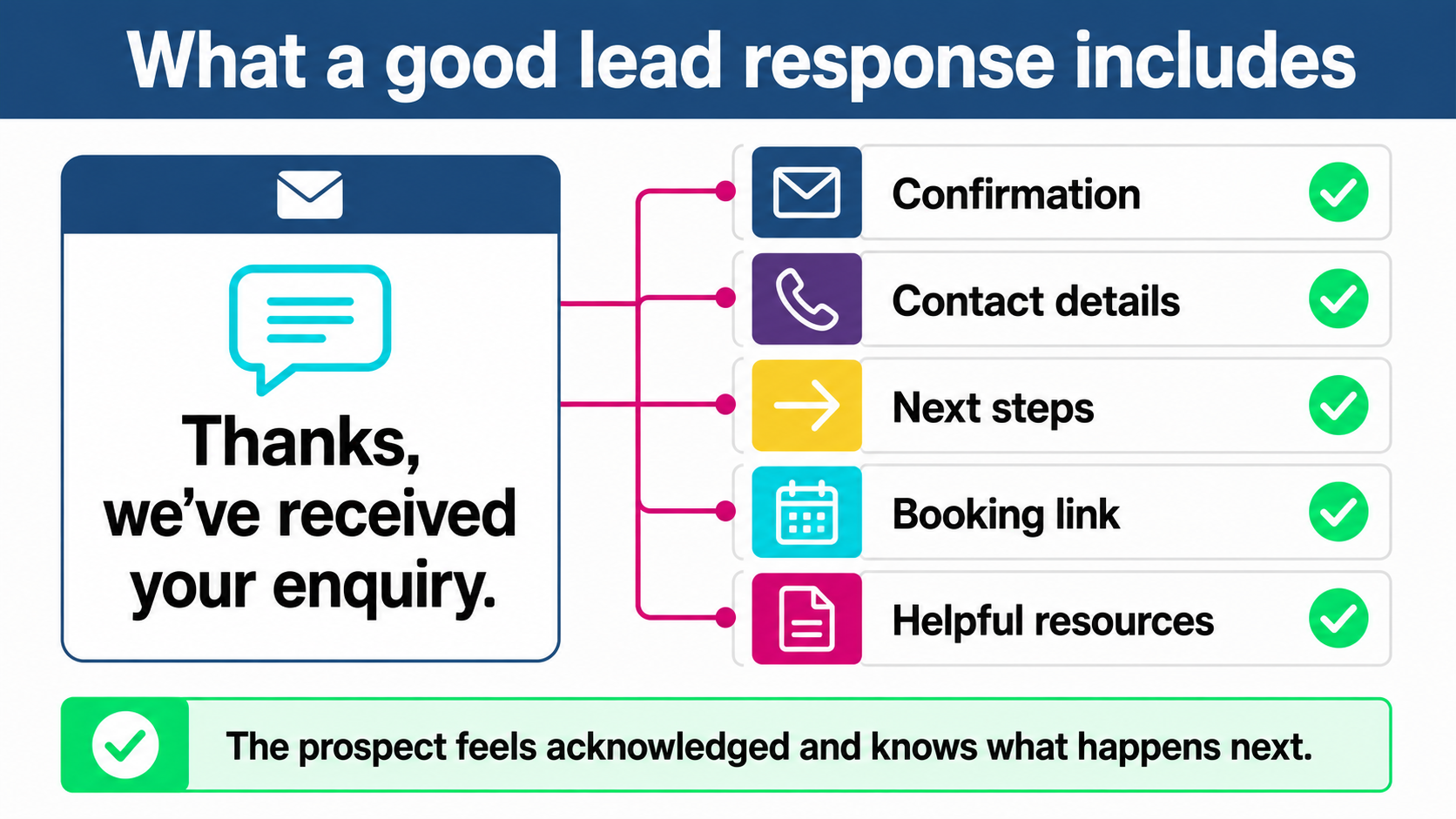
A prospect submits a form.
Within seconds they receive:
"Thanks for your enquiry. We've received your information and a member of our team will be in touch shortly."
The message also includes:
Contact details
Next steps
A booking link
Helpful resources
Immediately the prospect feels acknowledged.
They know the enquiry was received.
They know what happens next.
This simple process can significantly improve conversion rates.
The Competitive Advantage
Most businesses still rely on manual follow-up.
That creates an opportunity.
The businesses that respond first often win.
Not because they're cheaper.
Not because they're better.
But because they're present when the prospect is most engaged.
Speed Creates Better Conversations
Fast follow-up improves more than conversion rates.
It improves the quality of conversations.
The prospect remembers:
The advert
The offer
The enquiry
Everything is fresh.
This makes the sales process easier for everyone involved.
Final Thoughts
Lead generation doesn't end when someone fills in a form.
In many ways, that's where it begins.
The businesses generating the best results understand that speed matters.
By combining advertising with automation and structured follow-up, they create a better experience for prospects and significantly increase their chances of turning enquiries into customers.
The first five minutes matter.
Make them count.

